

Understanding AFRDI Level 6 & EN1335 Certifications for Australian Office Chairs
 ErgoHuman Staff10 July 20267 Mins read
When Australian businesses search for AFRDI Level 6 certified office chairs, they are usually looking for more than a comfortable place to sit. Commercial buyers, office managers, procurement teams and workplace decision-makers need confidence that office seating can meet recognised expectations for safety, durability, stability and ergonomic performance. At Ergohuman Australia, certification is an important part of understanding how a premium ergonomic office chair is designed and tested for demanding workplace environments. However, AFRDI Level 6, EN1335, BIFMA and heavy-duty certifications are different standards, and knowing what each one represents can make office-chair procurement much easier.
The terminology surrounding office-chair certification can initially appear complicated. A chair may reference an Australian standard, a European standard, an American testing framework or an additional heavy-duty rating. These certifications do not all measure exactly the same criteria, which means businesses should understand the standards relevant to their workplace rather than treating every certification badge as interchangeable.
What Does AFRDI Level 6 Mean for Office Chairs?
AFRDI stands for the Australasian Furnishing Research and Development Institute. Within the Australian office-furniture market, AFRDI certification is commonly used to demonstrate that furniture has undergone independent assessment against applicable performance requirements.
The term AFRDI Level 6 certified office chairs is particularly relevant in commercial procurement because Level 6 is associated with severe commercial use. Rather than assessing whether a chair simply looks strong or feels comfortable during a short trial, certification testing is intended to examine areas such as structural strength, stability, durability and performance under repeated use.
That distinction is important for Australian workplaces. A chair used occasionally in a home study faces very different demands from seating used five days a week in a corporate environment. Shared workstations, call centres, government facilities and busy commercial offices may expose chairs to repeated adjustments and different users throughout their working life.
For procurement teams, a recognised certification can therefore provide useful evidence that a chair has been evaluated against defined requirements rather than relying only on marketing descriptions.
Why AFRDI Level 6 Certified Office Chairs Matter to Australian Businesses
For an individual purchasing one office chair, comfort and personal preference may be the main considerations. Commercial procurement is more complicated.
A business purchasing ten, fifty or hundreds of chairs needs to think about consistency, expected usage, durability and workplace requirements. An office chair may be adjusted several times each day, moved between workstations and used by employees with different body sizes and sitting preferences.
This is one reason searches for AFRDI Level 6 certified office chairs often come from people involved in corporate purchasing rather than casual furniture shopping.
Certification gives buyers a clearer framework for evaluating office furniture. Instead of judging a product solely by price, appearance or a list of ergonomic features, a procurement professional can also consider whether the chair has been tested against a recognised standard appropriate for its intended application.
This can be particularly relevant when a workplace specification, tender or internal procurement policy requires evidence of recognised furniture testing.
Understanding EN1335 Certification in Australia

While AFRDI is familiar within Australian office-furniture procurement, EN1335 is an important European office-chair standard that is also relevant to Australian buyers.
Anyone researching EN1335 certification Australia will commonly encounter two important parts of the standard: dimensional requirements and safety requirements.
The Ergohuman 2 office chair range is certified under EN 1335-1:2020 and EN 1335-2:2018. EN 1335-1 deals with dimensions and dimensional requirements, while EN 1335-2 addresses safety requirements.
The dimensional component matters because ergonomic seating needs to accommodate a meaningful range of users. Office-chair dimensions influence seat positioning, back support and how effectively a user can adjust the chair around their body and workstation.
Safety testing considers areas including stability, strength and durability. Rather than treating ergonomics purely as cushioning or comfort, EN1335 recognises that an office chair must combine appropriate dimensions and adjustment with reliable structural performance.
For Australian buyers comparing premium office chairs, EN1335 therefore provides another useful indication that the product has been designed and assessed against recognised office-seating requirements.
EN1335 and Ergonomic Adjustability
Certification is especially valuable when it connects directly with the way people actually use office chairs.
An ergonomic chair should not require every employee to sit in exactly the same fixed position. People vary in height, body proportions, desk configuration and preferred working posture, which is why adjustability is central to modern ergonomic seating.
EN1335 dimensional requirements are intended to establish appropriate office-chair dimensions, while its performance and safety requirements examine whether the chair can operate safely for its intended use.
This means EN1335 certification Australia searches are relevant not only to safety-conscious procurement departments but also to buyers who want greater confidence that a chair has been developed specifically for office work rather than simply styled to resemble an ergonomic product.
The Ergohuman chair certification page provides further information about the standards applying to Ergohuman seating, including EN 1335 and other internationally recognised certification frameworks.
What Does 24/7 Office Chair Certification Actually Mean?
One area that often causes confusion is the phrase “24/7 office chair”.
It does not simply mean that a manufacturer believes a chair feels comfortable enough to sit in for a long time. Heavy-duty office-chair certification is intended for significantly more demanding use than a conventional single-shift office environment.
A 24-hour workplace may operate through multiple shifts, which means the same chair can be used by several employees across a single day. Examples can include operational centres, monitoring environments and other workplaces that remain active around the clock.
This dramatically increases the amount of use experienced by components such as the seat, backrest, mechanism, armrests and base.
Ergohuman Australia states that the Ergohuman Elite and Luxury SE models are certified under BS5459 for bodyweights up to 150 kg and use up to 24 hours per day across three shifts.
For commercial buyers, this heavy-duty certification provides a much more meaningful indication of suitability for intensive use than a general claim that a chair is “strong” or “commercial grade”.
AFRDI Level 6 vs EN1335: Are They the Same?
AFRDI Level 6 and EN1335 should not be treated as two names for the same certification.
They belong to different certification frameworks and are used in different markets. AFRDI is particularly familiar in Australian furniture procurement, while EN1335 is a European office-chair standard covering important dimensional and safety requirements.
The practical takeaway is that procurement teams should examine which certification their project actually requires.
If a tender, government contract or workplace furniture specification explicitly states that AFRDI Level 6 certified office chairs are required, buyers should verify that exact certification for the chair being proposed rather than assuming another international certification automatically satisfies the requirement.
If the requirement concerns EN1335 compliance, the applicable EN1335 certification should similarly be checked.
This distinction helps purchasing teams avoid one of the most common problems in office-chair specification: treating multiple standards as though they are directly interchangeable.
BIFMA vs AFRDI Chairs: What Should Buyers Understand?

Another common comparison is BIFMA vs AFRDI chairs.
BIFMA is widely associated with the North American commercial furniture industry and includes testing focused on areas such as durability, stability and strength. Ergohuman Australia states that the new Ergohuman 2 range is certified under American ANSI/BIFMA standards in addition to its European certifications.
AFRDI, meanwhile, has particular relevance within Australia and New Zealand and may be specifically requested in Australian procurement documentation.
Neither acronym should be judged simply by which one sounds more rigorous. What matters is whether the certification is relevant to the specification, workplace and procurement requirement involved.
A corporate buyer may value multiple recognised certifications because they provide different forms of evidence about a chair’s construction and performance. However, where an exact certification is mandatory, buyers should always confirm the model-specific documentation rather than substitute a different standard.
Why Certification Matters for Commercial Office Fit-Outs
The larger an office fit-out becomes, the more important consistent product specifications become.
When an organisation purchases seating across dozens of workstations, reliability cannot realistically be assessed one chair at a time. Procurement managers need repeatable criteria that allow products to be compared before an order is approved.
Certification provides part of that framework.
It can also help architects, office managers, workplace consultants and procurement teams document why a particular chair was selected. This is especially useful where occupational health and safety requirements, internal standards or project specifications form part of the purchasing process.
Australian organisations planning larger workplace projects can use the Ergohuman B2B and Corporate Office Fit-Outs service to discuss office seating requirements, quantities and commercial projects directly.
This makes it easier to assess the appropriate Ergohuman seating solution in the context of the workplace rather than treating every office fit-out as a collection of individual consumer purchases.
Why Heavy-Duty Testing Is Important for Long-Term Use
The real value of commercial furniture testing becomes clearer when you consider how an office chair is used over several years.
A chair is repeatedly sat on, adjusted, reclined, moved and rotated. Armrests may be repositioned throughout the day. Different users may apply loads in different ways. Components that seem perfectly strong when new must continue functioning through repeated cycles of use.
Heavy-duty testing attempts to reproduce the stresses associated with this type of repeated usage within a controlled testing process.
That is why certification can be more informative than simply looking at the thickness of a frame or the apparent weight of a chair. Durability is about how the entire seating system performs together over repeated use, including its structure, mechanism and supporting components.
For organisations operating extended-hour environments, the additional BS5459 heavy-duty certification applying to Ergohuman Elite and Luxury SE models is therefore particularly relevant.
Choosing Certified Office Chairs for Your Australian Workplace
The best certification depends on the needs of the project.
A business purchasing seating for a standard corporate office may place significant importance on recognised ergonomic dimensions, safety, durability and adjustability. A workplace operating around the clock may also require evidence of suitability for intensive multi-shift use. A government or contractual procurement specification may explicitly state a required Australian certification.
The correct approach is therefore to begin with the actual workplace requirement and then confirm which chair documentation satisfies it.
Buyers searching specifically for AFRDI Level 6 certified office chairs should verify the current AFRDI status of the exact chair model being considered. Buyers assessing Ergohuman chairs can review the official certification information covering EN1335, ANSI/BIFMA and the heavy-duty standards applicable to particular models.
Doing this before placing a large commercial order gives procurement teams much greater confidence that the selected chair aligns with the project’s documented requirements.
AFRDI Level 6 Certified Office Chairs: Making an Informed Decision
Understanding office-chair certification does not need to be complicated. AFRDI Level 6, EN1335, ANSI/BIFMA and heavy-duty standards all provide useful information, but they should be understood individually rather than grouped together as one generic measure of quality.
For Australian procurement teams specifically requiring AFRDI Level 6 certified office chairs, the exact certification should always be confirmed at model level. Where EN1335 compliance is important, Ergohuman’s certification documentation provides information about the European standards achieved by the current range. For intensive commercial environments, selected Ergohuman models also carry heavy-duty certification for demanding multi-shift use.
Ultimately, the strongest office-chair purchasing decision combines ergonomic adjustability, appropriate dimensions, structural quality, recognised certification and suitability for the actual workplace.
Businesses planning larger seating orders or corporate fit-outs can explore Ergohuman Australia’s B2B office fit-out solutions and review the official Ergohuman chair certification information before selecting seating for their organisation.
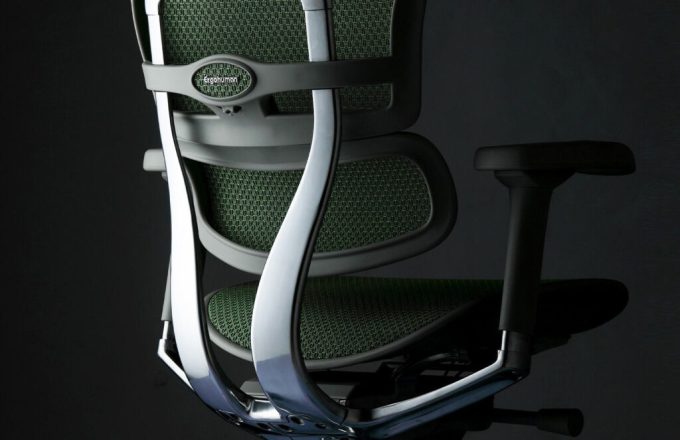
Ergohuman Ultra Review: Is It Worth Buying in 2026?
If you've spent any time comparing ergonomic office chairs in Australia, chances...
ErgoHuman Staff2 September 2026
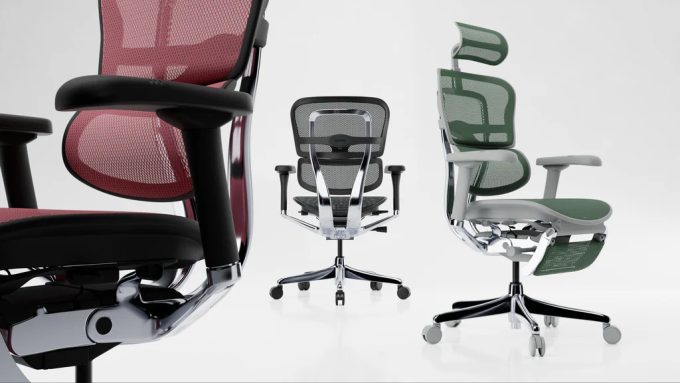
Ergohuman 2 Elite Review: Is the Elite Mark II Worth the Upgrade?
The Ergohuman 2 Elite Mark II has become one of the most...
ErgoHuman Staff1 September 2026
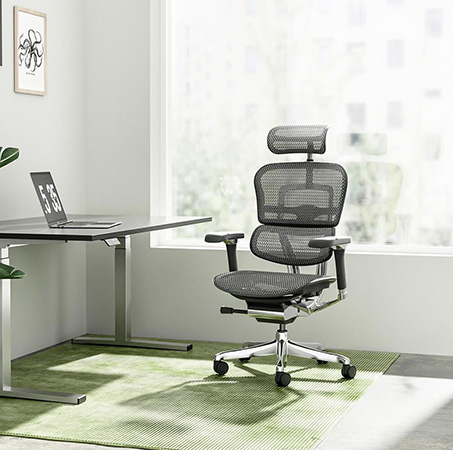
Best Home Office Chairs in Australia: 2026 Buyer’s Guide
Choosing the right home office chair is one of those decisions that...
ErgoHuman Staff29 August 2026

Leather Office Chair Buying Guide: How to Choose Genuine Leather vs Other Materials
If you spend eight or more hours a day at your desk,...
ErgoHuman Staff28 August 2026